




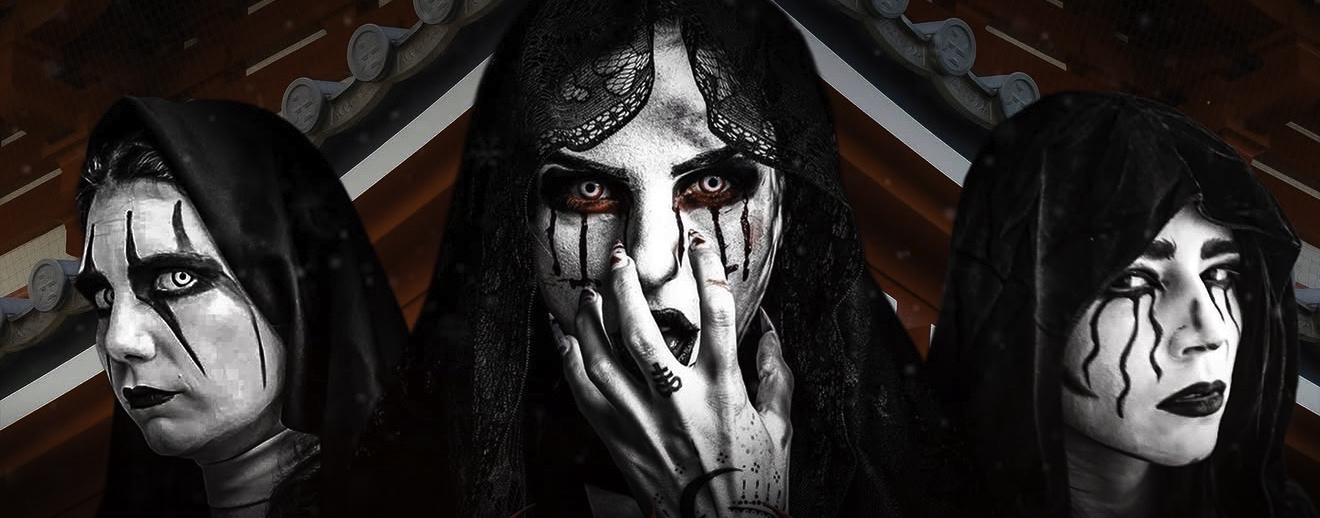
Over the past several years, Dogma became one of the more unusual and heavily discussed projects within modern metal. Combining religious imagery, theatrical presentation and anonymous stage personas, the band quickly developed a strong international following through a mixture of striking visuals, dark cinematic themes and catchy songwriting.
For many listeners, Dogma’s appeal extended beyond the music itself. The project’s mysterious aesthetic, occult-inspired themes, carefully constructed identities and highly praised live performances helped the band rapidly build a dedicated following.
As the band’s popularity increased, audiences also became increasingly attached to the musicians behind the personas. Characters such as Lilith, Lamia, Rusalka, Nixe and Abrahel developed followings of their own, with many fans recognising the importance of the performers themselves in shaping Dogma’s identity and stage presence.
At the same time, discussion surrounding the project’s creative structure also began to emerge within fan communities. Questions surrounding songwriting, composition and the extent of the musicians’ involvement behind the scenes became recurring topics of speculation online. While these discussions remained largely centered around the artistic and business structure of the project rather than allegations of mistreatment, they contributed to growing curiosity surrounding who was truly responsible for shaping Dogma creatively.
For much of this period, however, there was little public indication of the events that would later unfold.
The situation changed suddenly during the early stages of Dogma’s 2025 United States tour, when fans noticed that several familiar members had apparently been replaced without explanation. In particular, the absence of three highly recognisable performers immediately generated confusion and speculation among followers online. No significant official statement was initially provided by Dogma itself, and performances continued as though little had changed.
In the days that followed, the former members began speaking publicly through social media regarding their experiences surrounding the project and their departure from it. Allegations concerning mistreatment, creative disputes and management issues quickly spread throughout online fan communities, transforming what had previously been speculation about the project’s structure into a much broader controversy surrounding Dogma itself.
Roughly a month later, VINDICTA was officially announced.
The emergence of the new project immediately attracted attention due not only to the involvement of former Dogma performers, but also because of the revelation that Alvaro Rabaquino, known publicly as The Dark Messiah and identified as one of Dogma’s original co-founders, songwriters and composers, was now working directly with VINDICTA.
In a lengthy public statement released following the controversy, Rabaquino described Dogma as having originally been founded as a collaborative project involving himself, Federico Rabaquino and Ian Di Leo. According to his account, he had been primarily responsible for the music, lyrics and much of the project’s creative direction, while later disputes surrounding management, ownership and control ultimately led to a complete breakdown in the relationship between the creators behind the project.
The statement also alleged wider issues involving management practices, creative ownership and the treatment of performers involved with the band. While aspects of the situation remain disputed and discussion surrounding the controversy continues among fans online, the statement significantly altered public understanding of Dogma’s internal structure and the circumstances surrounding the formation of VINDICTA.
For many followers, VINDICTA quickly came to be viewed not simply as a separate side project, but as a continuation of many of the creative elements that had originally drawn audiences toward Dogma in the first place. This perception was strengthened further by the release of VINDICTA’s debut single, “The Face of the Clown”, which marked the beginning of the project’s new musical direction.
At the same time, VINDICTA has increasingly positioned itself as more than simply a reaction to past events. While the shared history between the two projects forms an unavoidable part of the story, the band has steadily established its own identity centred around modern metal influences, cinematic presentation and a lineup formed from musicians who had previously performed within Dogma itself, despite being based across different countries.
Importantly, the artists involved have also repeatedly emphasised their desire not to be defined solely by controversy or conflict. Although the circumstances surrounding the split between former members and Dogma remain closely connected to VINDICTA’s origins, much of the focus surrounding the new project now centres on its music, live performances and future ambitions rather than the disputes that initially brought attention to its creation.
Today, VINDICTA represents both the continuation of an important chapter in the artists history and the beginning of a new one. For fans discovering the band through Dogma related searches and discussions, the connection between the two projects provides essential context. Ultimately, however, VINDICTA is increasingly focused not on revisiting the past, but on building a future defined by artistic freedom, strong musicianship and the music itself.